“Safety is measured in kilometres, not time”
Move NZ into the 21st century
- Every on-road vehicle fitted with a $15 GPS meter
- Every 15,000 KM WOF is due
- <15,000 km over a decade, WOF at 10th year
- ACC by kilometres
- Road Use Charges by kilometres for all vehicles
- Eliminate annual licensing, it is an analog legacy
- Simple, low cost device. No connection to the grid.
- Reset by WoF inspector on pass
- No paper rego or WoF, all is online, all is digital
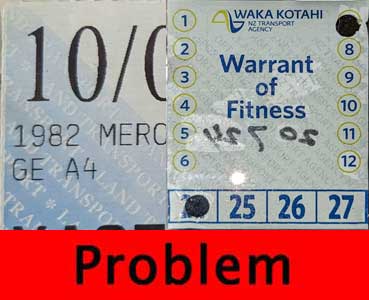
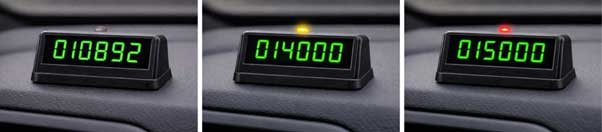
The WoF meter – from years to kilometres
ROAD USE IN THE DIGITAL ERA
Why do we still have calendar-based WoF, even if the Minister is calling for larger intervals?
Because that is how we always have done it.
In the digital era, a $15 device can be installed on the dashboard of every vehicle at its next WoF. It reads distance by GPS. At 14,000 km, it turns on a yellow light to remind to get a WoF. At 15,000 km the light turns red, signalling the vehicle is illegal to be operated on the road. The light also turns blue if the WoF has not been reset in 10 years (typically for a low km/year collectible vehicle).
Why? A new vehicle will soon be allowed 4 years before its first WoF. It will have averaged 50,000 km. The most dangerous wear items on vehicles are tyres and brakes. Tyres wear out in kilometres, not years. Brakes wear out in kilometres not years. A collectible car may be driven 5,000 km in four years. It is safe because it is not wearing out. But for the parts that may deteriorate over time, an inspection every decade will pick it up.
GPS-BASED REGO/ACC/RUC/WOF-COF
Proposed: Replace time-based licensing, ACC, road-use & WoF/CoF with kilometre-based GPS tech.
Summary: GPS changes everything. It allows a simple $15 device to record how many kilometres a vehicle drives on the road, so all vehicle charges: License (rego), ACC, road wear (RUC/FED) and vehicle wear (WoF/CoF) can shift to distance-based payment. The device is intentionally kept simple and low cost – a GPS Meter (GPSM) that eliminates time-based fees, charges and inspections.
Facts:
- ACC injuries in motor vehicles are not based on elapsed months, but on number of kilometres on the road yet the annual fee is time based.
- Annual licensing is an analog legacy that makes no sense in a digital world where Crown central computers keep records of all vehicles. Digital annual licensing wastes time and money.
- Road wear is caused by road use and weight, not elapsed time. While FED roughly taxes road use, targeted RUC is far more precise, and can be finer tuned for true user pays.
- New roads should be paid by an RUC allotment paid into a capital fund or by automated tolls
- Vehicle safety (WoF/CoF): Vehicle wear arises primarily from driving rather than elapsed time. For the components that dominate WoF and CoF failures—tyres, brakes, suspension, and steering—well over 90% of wear correlates with distance travelled and operating cycles, not calendar age. Time-based deterioration does exist, but as a secondary contributor, it can be addressed through a built-in decade-based check.
- Conclusion: Annual (time-based) rego, ACC, road-wear charges, and WoF/CoF were developed for the analog (paper-based) era because manual kilometre-based tracking was complex. As a result, distance-based charging was largely limited to RUC for heavy diesel vehicles. Automated digital tracking now makes time-based systems obsolete.
Technology: GPS Meter (GPSM)
A GPS Meter is a $15 digital device permanently installed on the vehicle dashboard. It displays elapsed distance based on GPS satellite readings. It is owned by the Crown (as are rego plates). It is VIN-coded and stays with the vehicle for life. The GPSM displays elapsed mileage solely for Crown purposes, and it does not match the vehicle odometer. Its sole purpose is to track distance for government management of on-road vehicles, including WoF/CoF intervals and collection of fees and charges for licensing, ACC, and road wear (RUC/FED).
- Each registered vehicle in NZ has a GPSM installed at its next WoF/CoF – one time installation payment paid by NZTA to inspector, amortised over ten inspection cycles
- The GPSM has a Bluetooth Write Once memory where the inspector keys in the VIN and the selects mileage on a drop-down field that is rounded up to the next 5,000 KM (for example, if 51,284 km on the car, select 55,000)
- GPSM fixed to lower-right dashboard, similar to the location of some Japanese-car toll devices
- GPSM has a light on top that turns on yellow when the next WoF/CoF is coming up and turns red if past due for inspection. Parking wardens may issue infraction notice on red light
- Counter illumination turns on with ignition. Red light stays on with the key out and door locked
- Counter only records with key in ignition (no distance recording on ferry boat or on tow truck)
- To prevent driver distraction, GPSM is not illuminated at night, but the warning light stays on
- Non-volatile memory retains counter indefinitely without any battery or standby power
- Include an elapsed-years counter and trigger the red light if 10 years pass without inspection, to cover low-use vehicles where parts can deteriorate with age (e.g., tyres, wipers)
- Approximately 10-minute install; hard-wired power only, no CAN bus or ECU interaction
Application
- End FED and replace with RUC for all vehicles
- End Registration (license) fee and build it into RUC to be revenue neutral
- End ACC annual fee and build it into RUC to be revenue neutral
- End annual (or semi-annual) WoF/CoF and replace with kilometre-based inspection deadlines
- Recommend legislation specify that fees are to be solely for user pays – ACC for vehicle injuries only, RUC for road use only (not rail, dedicated busways, etc).
WoF/CoF Schedule
- End annual or semi-annual WoF/CoF, replace with distance intervals
- Vehicle due for its WoF/CoF within 1000 km when light turns yellow
- If vehicle is driven 1,000 km in the red before inspected (16,000 km), NZTA automatically fines the owner which must be paid before the WoF/CoF is issued. Fines increase with red distance.
- No exemption for new vehicles, GPSM installed when new, first inspection at 15,000 km
- WoF/CoF Bluetooth reset is online-authorised by NZTA (one-time signed token); inspectors cannot reset the GPSM without NZTA clearance. This prevents inspector corruption.
- Reset turns off the meter light and resets counter to next cycle (inspection at 14,873, reset sets to 30,000)
- Failure to have current RUC paid up at the WoF/CoF is a fail by the inspector and an automatic fine by NZTA unless on owner is on autopay (see below)
License/ACC/RUC
- Shift license, ACC and road use to RUC
- Base RUC on actual road damage statistics (heavier vehicles pay more per km)
- Similar to IRD provisional tax, enable owners to set up a provisional RUC automatic payment plan with NZTA based on their projected vehicle use. No fine for underpayment if automatic payment plan is used, but next cycle the provisional payment rises. Option for a NZTA app that reads distance via Bluetooth on owners phone to send real-time updates to avoid surprises.
- Provisional payment ties to vehicle owner. When sold, it automatically cancels and either reimburses if overpaid or debits to clear account as of GPSM distance at date of recorded sale. Vehicle ownership record will not pass to buyer until the RUC is cleared.
Implementation
Officials may seek to repurpose the GPSM device for additional regulatory or enforcement functions. This should be explicitly resisted. The device should remain narrowly scoped to recording GPS-derived distance and elapsed years, and signalling the 15,000 km and 10-year inspection thresholds.
- Do not include WiFi or cell tower tracking, only Bluetooth to allow the inspector to do set once and reset WoF/CoF pass
- Not a transponder which costs more and enables government to intrude on people’s live
- Not a license plate reading system which invites government oppression by stealth
- GPSM tied to VIN, not rego plate or vehicle owner. Crown owns the GPSM
- A simple GPSM purchased in volume should not cost more than $15 per unit
- With 5 million registered vehicles and less than 200,000 new/used vehicles added to the fleet, order 7 million units (ten-year supply)
- Amortise over ten inspections (150,000 km) adding about $3 per WoF/CoF (but deduct the cost of paper WoF/CoF forms that is eliminated)
- Large fine for device not matching VIN or tampering with GPSM, including confiscation of vehicle
The effect of this on low-use collectible vehicles, including military and other CoF will be instant. Far fewer inspections, lower annual costs.
Farmers required to license tractors, farm vehicles and implements could opt to pay for a more sophisticated GPSM that includes mapping. It would trigger the distance recording only when the GPS shows the vehicle is on a taxable public road.
If such a system is universal and completely automated, chance of error will be far less. While the vehicle mileage and GPSM mileage will not match (up to 4,999 km out of synch), the operative mileage for Crown purposes will be GPSM. This will eliminate anomalies when an inspector keys in a wrong reading, or the 5-digit vehicle odometer rolls over from 99,999 to 0.
Rounding to the next 5,000 km increment or brief GNSS signal loss (e.g. tunnels) is immaterial to system purpose; existing RUC, FED, and ACC mechanisms are materially more inequitable.
GPSM enables true user pays, made possible by GPS and low-cost digital technology. By using 15,000 km increments, it is easy for drivers to see the countdown to the next WoF/CoF.
Conclusion
In its recent consultation on WoF/CoF frequency, NZTA excluded moving entirely to Road User Charges (RUC) for both charging and inspection considerations. This suggests a lack of understanding of how today’s technology enables government to manage outcomes more effectively and equitably.
Distance-based inspections and charging were difficult to administer in the analog era, when they relied on forms, manual recording, and fragmented paperwork. They are far more efficient in a digital environment, where government has centralised data and provides immediate, direct access to all relevant authorities, including police, traffic wardens, and inspectors.
While the per-vehicle cost of the proposed device is low, its feasibility rests on the existence of the global GPS infrastructure—a system representing an investment of approximately US$100 billion, paid for entirely by the United States taxpayer.
It is recommended to restrict tenders to domestic firms to foster local high-technology industry.