Please see this link for claim in PDF Format
STATEMENT OF CLAIM
IN THE HIGH COURT OF NEW ZEALAND
[REGISTRY] REGISTRY
UNDER
The Judicial Review Procedure Act 2016
and Part 30 of the High Court Rules 2016
IN THE MATTER OF
A decision, practice, and requirement imposed by the New Zealand Transport Agency through the Vehicle Inspection Requirements Manual (VIRM) Section 3-4 “Repaired Damage”.
BETWEEN:
Plaintiff
[to-be-determined body] representing owners, restorers, workshops, and industry participants in New Zealand’s historic and collectible motor-vehicle sector.
AND:
NEW ZEALAND TRANSPORT AGENCY | WAKA KOTAHI
A statutory entity established under the Land Transport Management Act 2003.
Defendant
INTRODUCTION
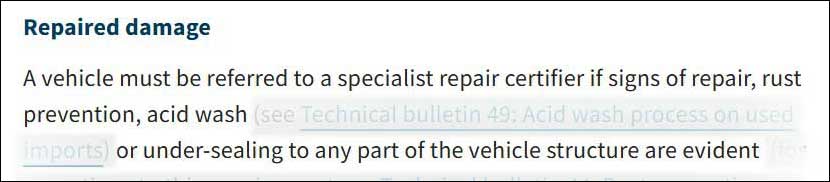
- The Plaintiff challenges the validity and application of the Defendant’s requirement in VIRM Section 3-4 “Repaired Damage”, which mandates referral of a heritage or collectible motor vehicle to a specialist repair certifier whenever “signs of repair, rust prevention, acid wash or undersealing” are present.
- The Plaintiff contends that this requirement, when applied to heritage or collectible motor vehicles, exceeds statutory authority, is unreasonable, irrational, inconsistent with the Land Transport Act 1998 and the Vehicle Standards Compliance Rule 2002, and has caused significant economic, cultural, and heritage damage.
- The Plaintiff seeks declaratory and ancillary relief in respect of the Defendant’s application of VIRM 3-4 to collectible vehicles.
- A declaration that the lawful test for referral to a repair certifier is whether an inspector can be satisfied, on the basis of observable evidence, as to the vehicle’s actual structural safety.
- A declaration that the mere presence of historic repair, refinishing, rust protection, or underseal on a collectible vehicle is not, without additional observable evidence of structural concern, a lawful basis for referral.
- Consequential orders requiring the Defendant to amend VIRM 3-4 and associated inspector training and guidance to reflect these lawful limits.
- Ancillary orders including consultation requirements, revision of inspector-liability incentives, and costs.
BACKGROUND
- Collectible vehicles form a distinct and recognised class of motor vehicle, whose primary value lies in historical, cultural, technical, aesthetic, or enthusiast significance, rather than routine transport use.
- A vehicle qualifies as a collectible vehicle if two or more of the following criteria apply:
- It is 25 years or older.
- It is recognised as collectible by the Vintage Car Club of New Zealand.
- It qualifies as a Special Interest Vehicle or Left-Hand-Drive collectible import under NZTA rules.
- NZTA has determined it to be of collectible or historic significance.
- It is maintained primarily for preservation, restoration, display, or enthusiast ownership rather than routine daily transport.
- New Zealand’s regulatory framework explicitly acknowledges differences between older/collectible vehicles and ordinary transport vehicles through age-based exemptions and modified standards, including:
- Special Interest Vehicle and Left-Hand-Drive pathways.
- NZTA reliance on VCC documentation for authenticity, dating, and qualification.
- Seatbelt exemptions for pre-1955 vehicles and modified requirements for pre-1977 vehicles.
- Glazing exemptions for pre-1991 vehicles and allowances for vintage curved glass.
- Lighting exemptions for pre-1956 vehicles and transitional allowances for pre-1977 vehicles.
- Brake and steering rules permitting compliance with performance standards applicable at the date of manufacture.
- Emissions exemptions for vehicles first registered before 1990.
- Equipment exemptions relating to mirrors, washers, wipers, and child-restraint anchorages for older vehicles.
- The Minister’s 2025 amendment extending WoF intervals to annually for vehicles 40 years and older.
- These distinctions demonstrate a longstanding regulatory recognition that heritage vehicles cannot sensibly be held to the same standards or assumptions as late-model vehicles.
- In the late 1990s and early 2000s, significant quantities of flood-damaged, insurance-written-off, and poorly repaired used vehicles were imported, generating political pressure to tighten structural-integrity requirements.
- The repair-certifier regime introduced under the Vehicle Standards Compliance Rule 2002 was designed specifically to address the risks associated with late-model imported vehicles of unknown crash or flood history.
- Collectible vehicles were not considered during the creation of these rules, because the heritage-vehicle sector—although economically significant—lacked a centralised advocacy organisation with a concentrated pecuniary interest or coordinated representation.
ECONOMIC AND CULTURAL IMPORTANCE OF COLLECTIBLE VEHICLES
- According to the Federation of Motoring Clubs (FOMC) 2024 Historic & Classic Vehicle Survey, New Zealand has approximately 369,600 historic and collectible vehicles, contributing an estimated $16.5 billion in economic activity and supporting more than 5,200 jobs. Public sentiment strongly supports heritage-vehicle preservation, with approximately 71% of New Zealanders viewing such vehicles as part of national heritage.
INSPECTOR LIABILITY AND SYSTEMIC OVER-REFERRAL
- Entry-certification and WoF inspectors bear long-tail personal liability if a vehicle they approve is later found unsafe.
- This liability exposure, together with required insurance coverage, powerfully incentivises defensive inspection practices.
- This liability structure has led to a scarcity of inspectors willing to examine older vehicles and has made automatic referral the rational choice whenever a vehicle does not appear factory-original.
- Inspectors therefore routinely refer collectible vehicles showing benign restoration work.
- The Defendant did not consider the predictable influence of inspector-liability incentives when drafting and maintaining VIRM 3-4.
- In practice, inspector discretion has been displaced by a liability-driven presumption in favour of referral.
- This outcome is inconsistent with the purpose and scheme of the Land Transport Act 1998.
ADVERSE EFFECTS OF VIRM 3-4 ON COLLECTIBLE VEHICLES
- NZTA guidance states that repair-certification costs, including disassembly and refinishing required for inspection, are borne by the owner and vary according to the work required.
- For collectible vehicles that have undergone legitimate structural restoration, inspectors frequently fail the vehicle where new structural work has been painted, even though the work is sound and there is no evidence of compromised safety. The mere presence of fresh paint on structural members is treated as a risk factor because inspectors, concerned about exposure to personal liability or loss of licence, adopt a defensive practice of referral. This results in the cost and burden of unnecessary specialist certification being shifted onto the vehicle owner.
- However, if the owner instructs the restorer to leave new structural work unpainted so that its integrity is fully visible and not obscured by coatings, inspectors frequently fail the vehicle on the basis that unprotected metal is prone to accelerated corrosion. This creates a set of mutually-inconsistent compliance expectations: painted repairs are treated as concealment, while unpainted repairs are treated as corrosion risk. The result is that properly restored vehicles have, in practice, no compliant presentation pathway.
- Other vehicles arrive in New Zealand in excellent original and unrestored condition, often from dry climates such as California, with no evidence that the vehicle is structurally unsafe. Their structural members retain factory paint or protective coatings, and their value lies in the preservation of these original finishes. However, to avoid personal liability, inspectors routinely fail such vehicles and require referral to a repair certifier. The repair certifier then requires that original coatings be stripped so that bare metal can be exposed for inspection, which permanently destroys the vehicle’s originality. This loss occurs not for any genuine safety reason but solely because of the wording and operation of VIRM 3-4.
- Once a collectible is failed at entry certification, the owner has 21 working days to remedy the failure or incur the cost of a new inspection. The prescribed remedy is to obtain either an LT307 (No Repair Certification Required Declaration – Light Vehicle) or an LT308 (Light Vehicle Repair Record of Certification). In practice, once a vehicle has been referred to a repair certifier, the certification process almost always exceeds 21 working days, resulting in additional inspection fees and further cost to the owner.
- The collectible vehicle must then be taken to an authorised workshop, where an independent repair certifier is engaged to inspect it. The first requirement in almost all cases is that previously completed and paid-for restoration work be undone by removing all underseal and paint, typically through abrasive blasting, so that bare metal is exposed for inspection. This first step commonly costs between $1,000 and $5,000 depending on the service provider and the size and complexity of the vehicle.
- The required removal of coatings is destructive and often irreversible. For vehicles that have recently been restored, it destroys paid-for restoration work and forces the owner to repeat the process at their own expense. For unrestored collectible vehicles that retain original factory finishes, the removal of coatings destroys historically significant and irreplaceable material, particularly where aftermarket refinishing performed in local workshops cannot replicate the manufacturing technology or finish quality of the original factory process. In both situations, exposing bare metal creates new corrosion risks, and diminishes the vehicle’s value and integrity. The destruction of sound finishes is disproportionate to any legitimate safety objective.
- Blasting is not a benign process. The various blasting methods used in New Zealand workshops each carry risks that are incompatible with the preservation of collectible vehicles and frequently cause permanent damage that exceeds any safety benefit.
- Sand and grit blasting are among the most aggressive methods and are effective at removing paint and corrosion. However, they can warp panels due to heat generated by friction on thin steel. They leave abrasive media trapped in pinch welds, chassis rails, sills, and box sections, where embedded grit can initiate corrosion. These methods can scratch and profile metal too deeply for thin automotive steel and may leave grit in mechanical components such as engines, transmissions, differentials, alternators, and starter motors. Abrasive media can also weaken brake lines, fuel lines, air hoses, and rubber components. They are wholly unsuitable for collectible vehicles.
- Glass bead blasting uses round glass beads of medium hardness and produces a smoother surface than sand or garnet. Nonetheless, it still embeds microscopic beads into the metal. Residual beads can fall out for years, including into wet or enclosed cavities, where they increase the risk of hidden corrosion. This method is unsuitable for body shells or original finishes.
- Dry ice (CO₂) blasting leaves no abrasive residue because the media sublimates on impact. However, it is less effective on deep corrosion or thick underseal, requires expensive equipment not commonly available in New Zealand workshops, and is seldom offered as part of repair certification procedures. It is also not accepted by all repair certifiers as a substitute for abrasive blasting.
- Soda blasting (sodium bicarbonate) is gentler and does not damage metal, but it leaves a thin alkaline film that must be thoroughly washed away or it interferes with primer adhesion. It is ineffective at removing heavy rust or thick underseal, limiting its usefulness for certification inspection
- Vapour blasting or wet blasting suspends fine media such as glass bead or garnet in water. While it produces far less dust and somewhat less embedded abrasive than dry blasting, it still leaves media behind, especially in seams, overlaps, and enclosed cavities. It is not suitable for structural cavities and is not effective on thick underseal or heavy corrosion. The remaining slurry itself must be fully removed, and residue can remain trapped in hidden areas.
- None of these blasting methods are harmless, and the Land Transport Act does not require or contemplate destructive abrasive removal of coatings as part of assessing vehicle safety. Abrasive blasting is a coarse industrial process suited to heavy steel structures, not to thin-gauge automotive panels or historically significant finishes. Requiring such methods as a prerequisite to repair certification is disproportionate to any legitimate safety purpose. While VIRM 3-4 may be appropriate for late-model imports intended for daily transport, and primarily used as a deterrent to discourage importers from importing vehicles that show signs of flood, corrosion, or collision repair, it is inappropriate to apply it to heritage or collectible vehicles unless there is a clear indication of compromised structural integrity. Initiating the LT308 repair-certification process in the absence of such evidence does nothing to improve public safety and instead results in avoidable and irreversible damage and cost to collectible vehicles.
- Once the surface metal has been exposed by blasting, it is not unusual for the repair certifier to require that holes be cut into structural members to check for internal corrosion. The current regime makes no distinction between late-model thin monocoque structures and the independent chassis used in many heritage vehicles. Nor does it recognise the established strength and weakness points of older vehicles, which a qualified inspector should be able to target without unnecessary invasive testing. In practice, intrusive cutting is often required in underbody areas where the cutting itself creates new structural damage that must later be repaired, and in outer panels such as guards, sill panels, and other visible surfaces where any hole must be restored to full cosmetic and paint quality to return the vehicle to its pre-inspection condition. These invasive procedures cause avoidable and often irreversible harm to collectible vehicles.
- The inspection regime also assumes that all body panels and exterior components contribute to a vehicle’s structural integrity, an assumption that is correct for modern monocoque vehicles but not universally correct for heritage vehicles designed before computer-based structural modelling. In many earlier designs, guards, sill panels, doors, and other exterior panels were cosmetic or lightly stressed components and were not intended to function as primary structural or crash-load-bearing elements. The degree to which such components contribute to stiffness varies widely across the more than 1,000 makes and models manufactured since 1900, yet VIRM 3-4 applies a uniform, computer-model-designed and manufactured monocoque-based expectation to all of them. Inspectors who are not trained in the design characteristics of older vehicles frequently apply those modern assumptions to non-monocoque or partially stressed designs, leading to invasive cutting of components that do not reveal structural defects and therefore serve no legitimate safety purpose.
- Further, cutting holes into body panels or structural members for inspection is not a benign process. Removing original metal disrupts the continuous load path of the component and introduces heat-affected zones when the hole is rewelded. These zones alter the metallurgical properties of the steel, create areas of brittleness, and increase the likelihood of future cracking or fatigue, particularly in older steels that were not designed to withstand localised heating. Cutting and welding also distort thin-gauge automotive panels, require filler and refinishing to restore appearance, and permanently destroy factory seams and finishes that are integral to the provenance and value of collectible vehicles. The process also burns away corrosion protection inside cavities and creates new moisture traps at weld seams, significantly increasing the risk of future internal corrosion. In many cases, the result is a vehicle that is less safe and less structurally sound than it was before the inspection. These adverse effects arise not from any actual safety concern with the vehicle but from the mandatory assumptions of VIRM 3-4, which require destructive intervention even when there is no evidence that the vehicle is unsafe.
- The Defendant has not established any training, guidance, or certification pathway that equips inspectors or repair certifiers to understand the structural design principles of heritage vehicles. As a result, inspectors apply modern vehicle assumptions to older designs and are unable to distinguish between components that are structurally critical and those that are merely cosmetic or removable. This absence of heritage-specific competency requirements contributes directly to unnecessary referrals, invasive testing, and the destruction of sound and historically significant material.
- Once the repair certifier is satisfied and issues an LT308, the owner is left with a vehicle that has been stripped, cut, or otherwise altered and requires substantial re-finishing. For a collectible vehicle that has undergone a $50,000 restoration to show quality, the post-inspection repainting and refinishing needed to return the vehicle to its pre-inspection condition can easily add $20,000 or more. None of this time or cost enhances the vehicle’s value; and for an original, unrestored vehicle, the mandated removal of factory finishes destroys its originality permanently.
- This refinishing is not benign. The hazardous waste generated through destructive refinishing does not simply disappear. Solid paint residues, contaminated filters, sanding dust, and overspray particulates that cannot be exported for incineration are ultimately disposed of in New Zealand’s engineered landfills, such as the Kate Valley Landfill in Canterbury or the Whitford Landfill in Auckland. These facilities use lined containment cells designed to prevent toxic substances from escaping into soil and groundwater, and must actively manage leachate which is chemically contaminated liquid that accumulates as waste breaks down. Even with modern liner systems, leachate-capture networks, and gas-management infrastructure, the long-term environmental burden is real. The toxic by-products created solely because VIRM 3-4 requires unnecessary removal and replacement of coatings on safe collectible vehicles become part of New Zealand’s permanent hazardous-waste footprint. The generation of this waste is not incidental to vehicle safety; it is a direct and avoidable consequence of the Defendant’s policy settings.
- Destructive inspection and refinishing also create significant health and safety risks for restoration workers. Blasting and sanding generate respirable dust containing metal particles, silica, and old paint residues, including lead and chromates that are common in heritage vehicles. Cutting and welding produce toxic welding fumes and heat-affected particulates. Refinishing exposes workers to isocyanates in modern automotive paints, which are potent respiratory sensitisers regulated under the Health and Safety at Work Act 2015. These operations also create risks of fire, solvent exposure, noise harm, and vibration injury. Although approved facilities are required by law to provide worker protection, compliance is not flawless in practice, and the only certain way to avoid these risks is to avoid the unnecessary destructive processes themselves. These hazards are imposed solely because VIRM 3-4 requires destructive removal and replacement of coatings on vehicles that are otherwise structurally safe. The Rule therefore creates occupational risks with no corresponding public-safety benefit.
- The compliance difficulty extends beyond delay, cost and adverse impact. It is increasingly hard to locate repair certifiers who have the knowledge or experience required to assess heritage vehicles. Inspectors with practical familiarity with chassis-based construction, coach-built bodies, and pre-computer-aided design methods are retiring or leaving the industry, and newer inspectors have had no exposure to such vehicles and receive no training in their design characteristics. As a result, the pool of certifiers capable of performing a meaningful safety assessment of collectible vehicles is diminishing, while the regulatory system continues to assume the availability of expertise that no longer exists. This structural mismatch imposes further cost, uncertainty, and risk on owners of heritage vehicles.
- The convergence of liability concerns, lack of heritage-specific training, and the costs and delays inherent in the current system has, since 2002, contributed to the closure of many restoration workshops in New Zealand, as globally-focused collectors conclude that bringing a collectible vehicle into the country and returning it to the road is simply too hard. Further, where a vehicle’s registration has lapsed rather than being placed on rego hold, many vehicles already in New Zealand now sit unused, slowly deteriorate in sheds, garages, and the backs of restoration workshops because of the unreasonable barriers created by VIRM 3-4.
- A further and deeply concerning consequence of the Defendant’s regime is that some owners, faced with destructive, invasive, and prohibitively expensive certification requirements, become aware of an unlawful workaround in which a structurally sound collectible vehicle is presented under the identity of another vehicle of the same model that has been physically destroyed but remains on the Motor Vehicle Register. This creates what is known as a “ghost car”, which is a vehicle whose physical structure or chassis number does not match the identity under which it is registered. In some instances, this occurs through a simple plate swap, which may be detected by comparing the registration details with the chassis number. However, many heritage vehicles that are the subject of this Claim use chassis-number plates that are riveted on, or contain stamped identifiers that can be cut out of the body and welded into another shell. These features make the illegality harder to detect and demonstrate the serious integrity risks created when the regulatory framework drives owners toward such unlawful solutions.
- Ghosting is illegal and results in vehicles operating unlawfully on New Zealand roads. If such a vehicle is involved in a crash, insurance, including 3rd party, may be declined. If detected by law enforcement, the owner may face penalties including impoundment, cancellation of registration, infringement fines, or prosecution carrying fines of up to $5,000 for false or misleading vehicle-identification information and up to $1,000 for operating an unregistered or mis-registered vehicle, together with potential demerit points. This illegal act, intentionally done by a ghosting owner, can result in the vehicle later being sold to an unsuspecting purchaser who only discovers the irregularity when something goes wrong.
- The Court should not condone unlawful conduct. However, the emergence of ghost cars demonstrates that it is the Defendant’s regulatory framework itself that is driving otherwise law-abiding owners toward unlawful solutions in order to avoid unnecessary destruction of structurally sound heritage vehicles. This outcome is contrary to the purpose of the Land Transport Act and demonstrates the disproportionate effect of VIRM 3-4 when applied to collectible vehicles.
- The overall impact of VIRM 3-4 is measurable harm to New Zealand’s $16.5 billion collectible-vehicle economy. Safe heritage and collectible vehicles are effectively prohibited from lawful use on the roads, which causes them either to deteriorate through enforced non-use or to be sold overseas to jurisdictions with more workable regulatory settings. The result is the loss of valuable heritage vehicles from New Zealand and significant harm to the domestic restoration, repair, and specialist-services sector that depends on their continued operation.
- Blasting is not a benign process. The various blasting methods used in New Zealand workshops each carry risks that are incompatible with the preservation of collectible vehicles and frequently cause permanent damage that exceeds any safety benefit.
INCOMPATIBILITY OF VIRM 3-4 WITH COLLECTIBLE VEHICLES
- Collectible vehicles will almost always show visible signs of historic repair, rust protection, refinishing, or underseal that are benign and expected for vehicles aged 25–125 years.
- VIRM 3-4 nonetheless requires referral whenever such indicators exist, even where unrelated to structural integrity.
- This presumption is factually incorrect and inconsistent with the statutory requirement that inspectors assess actual safety.
LEGAL FRAMEWORK
- The Land Transport Act 1998 requires that vehicles be safe and suitable and empowers NZTA to administer systems for assessing safety.
- The Act does not state or imply that evidence of repair, refinishing, or underseal is inherently unsafe.
- Under the Vehicle Standards Compliance Rule 2002, referral is required only where an inspector cannot be satisfied that a vehicle meets applicable safety requirements.
- VIRM 3-4 replaces this safety-based test with a mandatory presumption of risk based solely on cosmetic indicators.
GROUNDS OF REVIEW
- Substantive ultra vires.
- Error of law.
- Failure to consider relevant matters.
- Consideration of irrelevant matters.
- Unreasonableness / irrationality.
- Disproportionate impact.
- Improper purpose.
- Failure to consider the foreseeable effects of inspector-liability settings.
RELIEF SOUGHT
- The Plaintiff seeks:
- A declaration that VIRM 3-4 is unlawful to the extent that it mandates referral solely because of signs of repair, rust prevention, acid wash, or underseal on the structure of a collectible vehicle.
- A declaration that the lawful test under the Land Transport Act and the Vehicle Standards Compliance Rule is whether the inspector can be satisfied, on the basis of observable evidence, that the collectible vehicle is structurally safe, and that an inability to see beneath paint, rust protection, refinishing, or underseal does not, without additional evidence of structural concern, justify a finding that the inspector cannot be satisfied or require referral for repair certification.
- A declaration that an inspector may only refuse to be satisfied as to a collectible vehicle’s structural safety where there is specific, observable evidence giving rise to a reasonable concern of structural compromise, and not merely because coatings, finishes, or protective treatments prevent full visibility of underlying metal.
- A declaration that the Defendant must amend VIRM 3-4 and all associated inspector guidance to give effect to these lawful limits and to ensure that referral for repair certification of a collectible vehicle is based solely on observable evidence of potential structural compromise, and that coatings, refinishing, rust protection, or underseal are not to be treated as indicators of risk in the absence of such evidence.
- An order that the Defendant complete these amendments to VIRM 3-4 and associated guidance within six months, or within such other period as the Court considers appropriate.
- A declaration that the Defendant must revise inspector training and operational guidance to ensure that inspectors understand and apply the lawful evidential threshold for referral of collectible vehicles under VIRM 3-4.
- A declaration that, in amending VIRM 3-4, the Defendant must consult with representative bodies of the collectible-vehicle sector, including organisations recognised by the NZTA.
- A declaration that, when revising VIRM 3-4, the Defendant must take into account the effect of inspector-liability arrangements on referral behaviour to ensure that inspectors are not adversely incentivised to make unnecessary referrals of collectible vehicles.
Or, as an alternative to s33 above,
- As an alternative to the above, the Plaintiff suggests an order adding language added to VIRM 3-4 “Repaired Damage” to clarify:
This section does not apply to vehicles 25 years or more since manufacture. Do not refer such vehicles solely on the basis of signs of repair, corrosion treatment, refinishing, acid wash, or under-sealing, but only on the basis of observable compromise to structural safety
- Or if the Court prefers to be more specific
This section does not apply to collectible motor vehicles. Do not refer such vehicles solely on the basis of signs of repair, corrosion treatment, refinishing, acid wash, or under-sealing, but only on the basis of observable compromise to structural safety.
A vehicle qualifies as a collectible vehicle if two or more of the following criteria apply:
- It is 25 years or older.
- It is recognised as collectible by the Vintage Car Club of New Zealand.
- It qualifies as a Special Interest Vehicle or Left-Hand-Drive collectible import under NZTA rules.
- NZTA has determined it to be of collectible or historic significance.
- It is maintained primarily for preservation, restoration, display, or enthusiast ownership rather than routine daily transport.
Explanatory Note for 34 and 35 above (alternative relief):
A 25-year threshold provides a clear and predictable boundary that is consistent with how older vehicles are treated elsewhere within the transport regulatory framework. For vehicles of this age, the presence of past repair, refinishing, corrosion treatment, or undersealing is ordinary and does not, without more, provide a rational basis to infer structural compromise. Extending VIRM 3-4 to these vehicles imposes obligations that are not proportionate to any identified safety risk and is not required to advance the purpose of the Land Transport Act or the Vehicle Standards Compliance Rule. Limiting the application of VIRM 3-4 to vehicles less than 25 years old would ensure that the referral regime remains directed to the vehicle classes for which the regulatory assumptions about repair visibility and structural integrity properly apply.
36. Costs